A buying decision, explained
What will a crawl-space dehumidifier cost to run?
Estimate electricity cost from measured power and runtime, and interpret ENERGY STAR annual kWh without turning IEF into working watts.
By DehumidifierMatch editorial · 6 minute read · Published Oct 12, 2026 · Checked Oct 12, 2026
The decision first
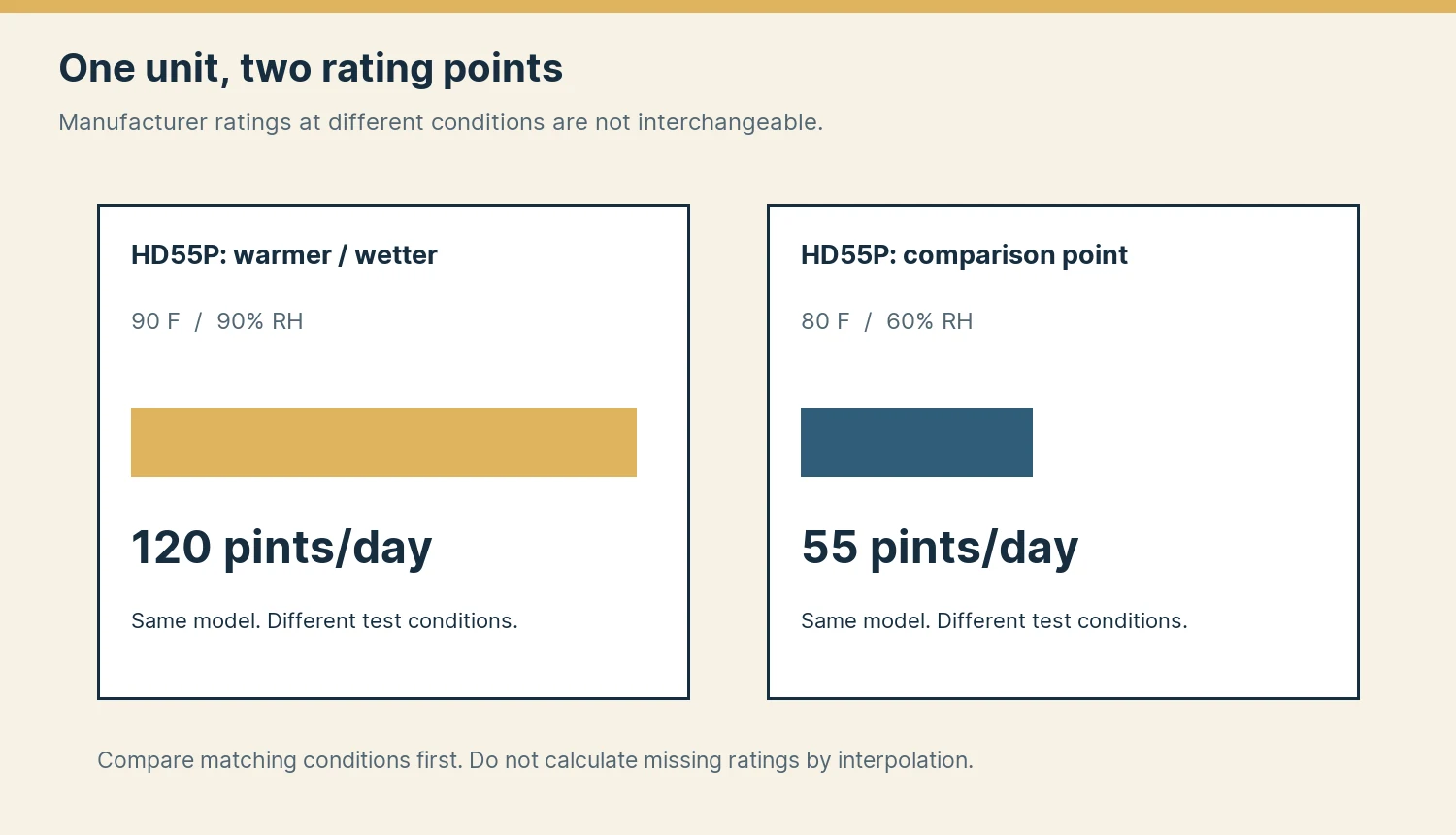
For a household estimate, use measured energy or operating watts with an explicit runtime and your tariff. ENERGY STAR annual kWh is a standardized comparison estimate, not the bill for your moisture load; IEF and rated amperes are different quantities.
See the model checks below ↓Start with the tariff and the energy quantity
Find the per-kWh electricity charge relevant to your usage. Separate energy charges from fixed fees when estimating the extra cost of the appliance. If you already have a suitable measurement of consumed kWh over a representative period, multiply that energy by the applicable rate. Otherwise use operating power and runtime as stated assumptions. The word representative matters: a damp initial drying period can differ from later maintenance operation.
- Use your own tariff rather than an assumed national average.
- State the measurement period or assumed daily runtime.
- Distinguish initial drying from the intended maintenance scenario.
Supporting sources: EPA ENERGY STAR / AprilAire; manufacturer PDF hosted by Sylvane ↓
Use a transparent scenario calculation
Energy in kWh equals operating watts divided by 1,000, multiplied by hours. Cost equals kWh multiplied by the tariff. For example, an assumed 500 W load running eight hours a day for 30 days uses 120 kWh; at an illustrative $0.20/kWh, that is $24. These are calculation scenarios, not ratings for any model or forecasts of how many hours your installation will require.
| Assumed operating power | Assumed runtime per day | Energy / cost |
|---|---|---|
| 300 W | 4 hours | 36 kWh / $7.20 |
| 500 W | 8 hours | 120 kWh / $24.00 |
| 800 W | 12 hours | 288 kWh / $57.60 |
Do not substitute amps, fan watts or standby watts
A rated current value does not establish real operating watts simply by multiplying it by line voltage. Fan-only and standby readings also describe different states from compressor operation. Our current profiles keep these readings and their conditions separate. If operating watts are unknown, we leave them unknown. Ask for a matching measured input or use a properly specified energy measurement for the actual installation rather than filling the gap with an attractive estimate.
An unknown operating-watt field is more useful than a fabricated bill estimate.
Use ENERGY STAR annual kWh as a standardized illustration
The V6 annual method uses 1,095 dehumidification hours plus energy in low-power modes. The current E100 entry reports 821 kWh/year, which gives $164.20 when multiplied by an example $0.20 tariff. The arithmetic is useful, but your runtime and moisture load are not fixed by the registry. Portable-test capacity uses 65°F/60% RH; whole-home uses 73°F/60% RH with a different configuration. Compare the appropriate regime and retain the source context.
Supporting sources: EPA ENERGY STAR / eCFR / U.S. Department of Energy ↓
Inspect the E100 certified-energy illustration →Check disputed records before naming an efficiency winner
The current V100/V125 profiles retain their reported annual kWh but disable cost arithmetic because those figures do not reconcile with the public capacity/IEF and annual-method calculation. The disputed numbers are excluded from comparison tables. This is not a declaration that certification is invalid. It means that an apparently lower annual value should not be used to sell a cost advantage until the entry is clarified.
Supporting sources: EPA ENERGY STAR ↓
Read the E100 vs V100 energy explanation →Estimate the equipment and the operating plan together
Compare the complete installation, moisture-entry work, expected operating arrangement and service access alongside the energy information. A smaller machine that runs longer is not automatically cheaper; a larger rating is not automatically wasteful. Ask what load the recommendation addresses and which assumptions drive the cost illustration. Revisit the estimate with measured energy after installation rather than treating a generic annual number as the final household budget.
Supporting sources: AprilAire; manufacturer PDF hosted by Sylvane / Santa Fe / EPA ENERGY STAR ↓
Prepare questions for an installation quote →Models to check against this decision
These are documented starting points. Apply the limits above before treating any model as an installed fit.
AprilAire E080 →
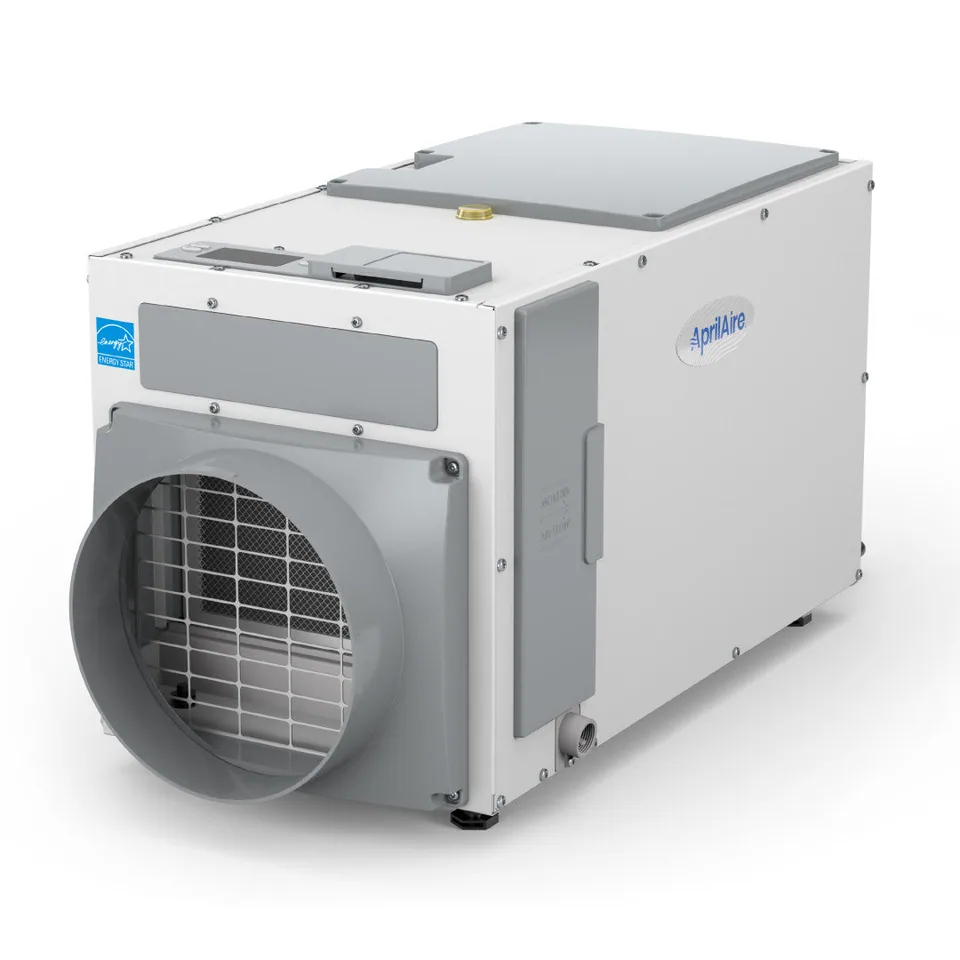
A matched whole-home record supplies capacity, IEF and standardized annual kWh.
Before choosing: Operating watts remain unverified; the annual illustration is not a bill forecast.
Inspect the model evidence →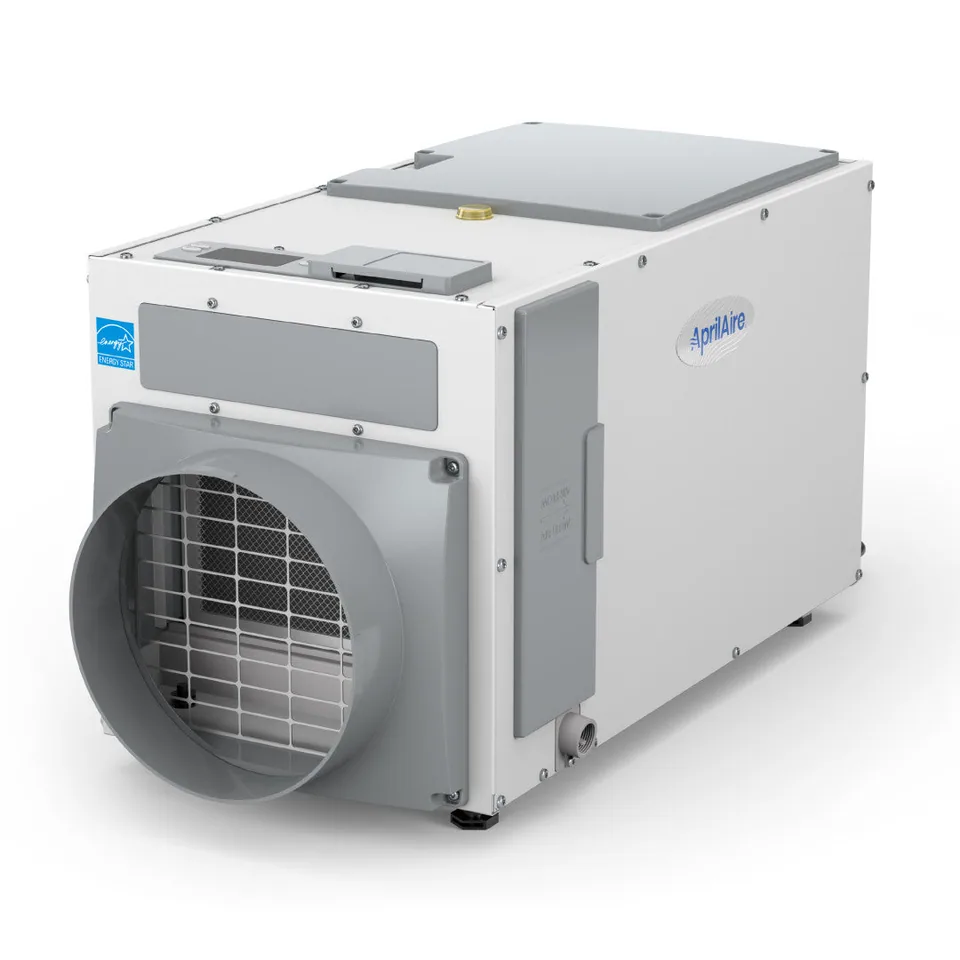
AprilAire E100 →
The registry reports 821 annual kWh and the profile lets you enter your tariff.
Before choosing: The assumed annual test method does not establish your moisture load or runtime.
Inspect the model evidence →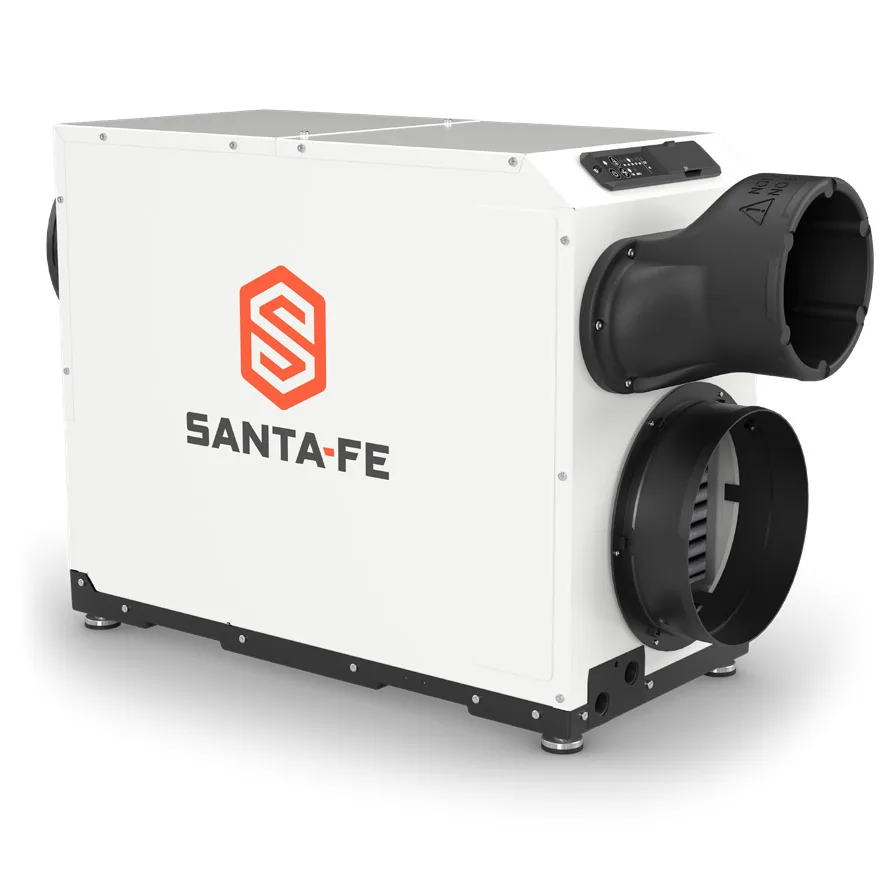
Santa Fe Ultra V100 →
The profile exposes both specification readings and the disputed registry annual entry.
Before choosing: Cost arithmetic is withheld; do not use the reported annual number as a winning claim.
Inspect the model evidence →Follow the evidence
Sources & further reading
Open the original material for the full context. A product specification is not an independent test.
- manufacturer manualAprilAire E080 & E100 Installation & Owner Manual 02.24
AprilAire; manufacturer PDF hosted by Sylvane · Checked Oct 12, 2026
Version: 10020792B, 02.24 - manufacturer specAprilAire E080 Specification Form 961 03.24
AprilAire; manufacturer PDF hosted by Sylvane · Checked Oct 12, 2026
Version: Form 961, 320713, 03.24 - manufacturer specAprilAire E100 Specification Form 962 04.24
AprilAire; manufacturer PDF hosted by Sylvane · Checked Oct 12, 2026
Version: Form 962, 320925, 04.24 - official guidanceDOE Appendix X1: dehumidifier test method
eCFR / U.S. Department of Energy · Checked Oct 12, 2026
Version: Current text, title updated through 2026-10-08Standard rating conditions differ by configuration. IEF includes low-power modes and is not operating input watts.
Show 8 more sources
- official guidanceENERGY STAR registry: Aprilaire E080 (ID 4510066)
EPA ENERGY STAR · Checked Oct 12, 2026
Version: V6 registry ID 4510066; R32Registry ratings apply to the named configuration and refrigerant; confirm the delivered model label.
- official guidanceENERGY STAR registry: Aprilaire E100 (ID 4510067)
EPA ENERGY STAR · Checked Oct 12, 2026
Version: V6 registry ID 4510067; R32Registry ratings apply to the named configuration and refrigerant; confirm the delivered model label.
- official guidanceENERGY STAR registry: Santa Fe 4047100 (ID 4510404)
EPA ENERGY STAR · Checked Oct 12, 2026
Version: V6 registry ID 4510404; R-454BRegistry ratings apply to the named configuration and refrigerant; confirm the delivered model label.
- official guidanceENERGY STAR registry: Santa Fe 4047200 (ID 4510405)
EPA ENERGY STAR · Checked Oct 12, 2026
Version: V6 registry ID 4510405; R-454BRegistry ratings apply to the named configuration and refrigerant; confirm the delivered model label.
- official guidanceENERGY STAR dehumidifier specification: Version 6 final
EPA ENERGY STAR · Checked Oct 12, 2026
Version: Final V6, effective October 1, 2025Annual consumption is a standardized test-based estimate using1095 annual dehumidification hours and low-power energy. It does not predict a particular household bill.
- official guidanceENERGY STAR certified dehumidifiers: active Version 6 dataset
EPA ENERGY STAR · Checked Oct 12, 2026
Version: Active V6 dataset, retrieved 2026-10-12Certification entries use exact names and configurations. Absence from this snapshot does not prove that a product has never been certified.
- manufacturer specSanta Fe Ultra V100 4047100 manufacturer specification TS-2152
Santa Fe · Checked Oct 12, 2026
- manufacturer manualSanta Fe Ultra70 4044100 Installation Instructions
Santa Fe · Checked Oct 12, 2026
Version: TS-2082 Rev C / 04.26Exact 4044100 instruction manual. Safety text asks for 12 inches at return/supply, while the location diagram shows 6 inches. Filter removal requires 13 inches. Do not silently choose the smaller airflow clearance.